anti-ableism maturity model
establishing your organisation's anti-ableist practice and looking at where to go next
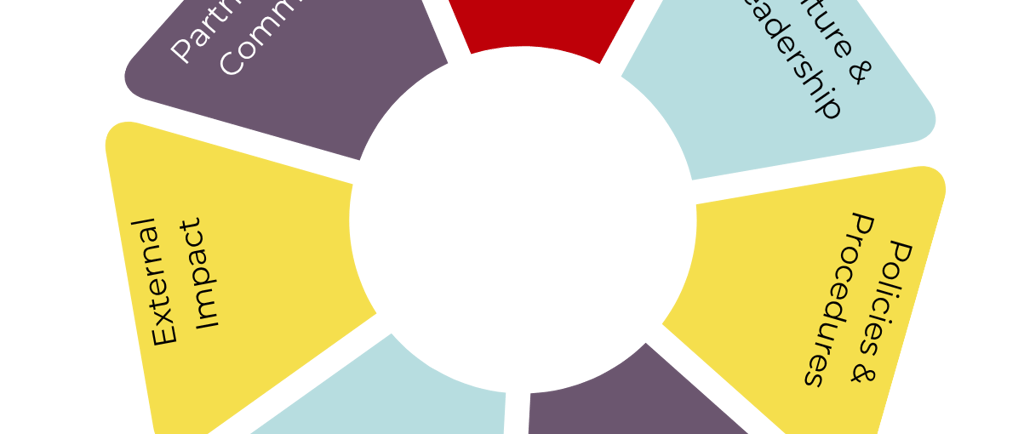
A maturity model is a surprisingly simple concept. It breaks down the work of an organisation into a number of different areas, and then assesses how "mature" the organisation is in each of those areas. I've encountered them in business in all sorts of contexts - but they've got an important, and under-used, application in diversity work.
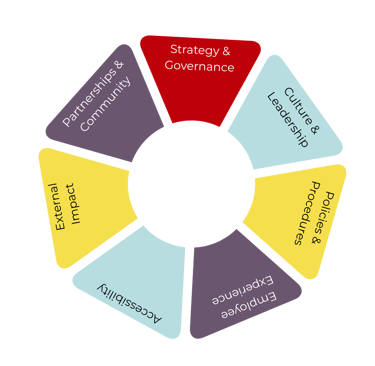
In my anti-ableism work with organisations, I realised it was often the case that an organisation had done lots of fantastic work in one area, but was struggling more in another area, and so I developed an anti-ableism maturity model. This allows me to work with an organisation to break down their work in a number of different areas, and assess the maturity of each element of their work:
Strategy & Governance
Culture & Leadership
Policies & Procedures
Employee Experience (Recruitment, Retention, Advancement)
Accessibility (Digital, Physical, Communication)
External Impact (Products, Services, Customers / Clients)
Partnerships & Community Engagement
When I work with organisations on the anti-ableism maturity model, I break each of those down into smaller areas, and we can assess the development of the organisation in each of those areas, from "foundational" work through to "compliant", "programmatic", "embedded", and "transformative". This means we can do targeted work on where improvements most need to be made - and then you can be supported to make those improvements.
It acknowledges that no organisation is everywhere it wants to be immediately, and that great practice in one area can be matched by challenges in another. It's only by identifying those challenges that changes can be made to how you work and anti-ableism can be better embedded in your daily practice.
If you're interested in analysing how your organisation is doing at anti-ableism, why not get in touch?
jamie hale
jamie@jamiehale.co.uk